New Snapshot Shows How Steep Arizonans’ Health Premiums Will Spike Without Congressional Action to Extend Tax Credit Enhancements
Analysis details costs for Arizona families if federal tax credits expire
PHOENIX — Data shows just how steep health insurance premiums will rise for Arizona families if Congress fails to extend enhanced Affordable Care Act (ACA) tax credits.
While national projections have shown that families across the country will face major increases, this new Arizona-specific snapshot, provided by the Arizona Center for Economic Progress’ partner, the Center on Budget and Policy Priorities, reveals the local impact.
For example:
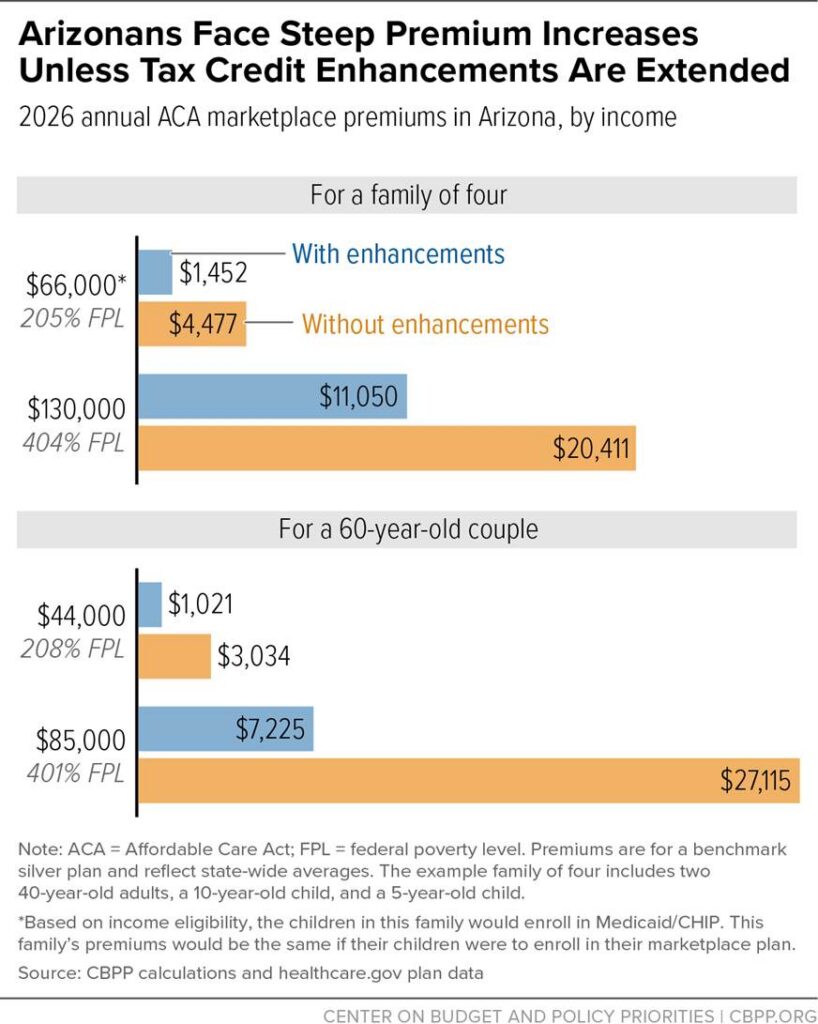
- A family of four earning $66,000 a year would see their annual ACA premiums jump from $1,452 to $4,477 if the tax credit enhancements expire.
- A 60-year-old couple with a combined income of $85,000 would see their annual premiums nearly quadruple — from $7,225 to $27,115.
See graphic below for more.
“This new snapshot puts a clear price tag on what’s at stake for Arizona families,” said Joseph Palomino, Director of the Arizona Center for Economic Progress. “Without congressional action, thousands of Arizonans will face premium increases that could make basic health coverage unaffordable.”
The enhanced ACA premium tax credits — originally expanded under the American Rescue Plan Act and extended through the Inflation Reduction Act — are set to expire at the end of 2025.
If they lapse, health coverage costs for many middle-income families and older adults will skyrocket, even as wages fail to keep pace with rising expenses.
“The data show that this isn’t just a federal issue — it’s a kitchen-table issue for Arizona families,” Palomino said. “Extending these tax credits would protect affordable coverage and prevent thousands from losing their health insurance altogether.”
The Arizona Center for Economic Progress is encouraging federal policymakers to act swiftly to extend the tax credits and preserve access to affordable health coverage for Arizona residents.
This state-specific analysis was developed by the Arizona Center for Economic Progress using data from the Center on Budget and Policy Priorities (CBPP) and healthcare.gov plan data. For more analysis and information, please go here. For a state-by-state breakdown, please go here.