

Arizona's cuts to higher education threaten access and equity
No state has cut more funding from higher education since 2008 than Arizona
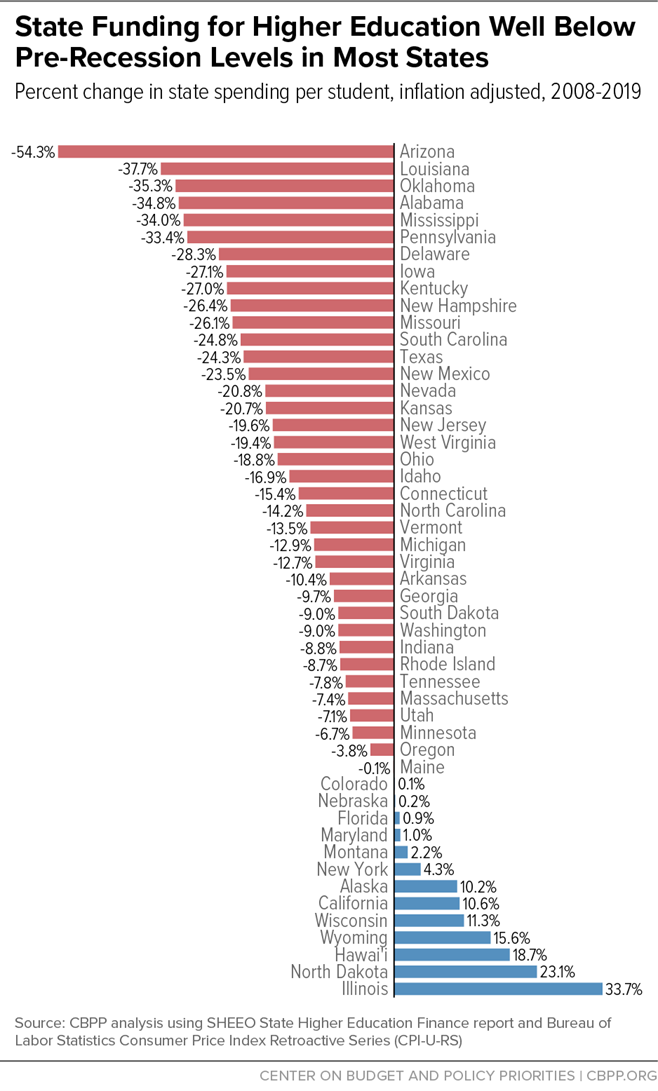
High-quality, affordable, and accessible public higher education is critical to building a prosperous and robust state economy, where the benefits of higher education are broadly shared and felt by all communities. In Arizona, state support of public colleges and universities has fallen short. According to a new report from the Center on Budget and Policy Priorities, between 2008 and 2019 Arizona made more cuts to higher education funding than any other state. After adjusting for inflation, per-student funding for Arizona public colleges and universities is 54.3 percent below 2008 levels.
Arizona’s Cuts to Higher Education Threaten Access and Equity
The state has made deep cuts to public universities and colleges, which have driven up tuition costs, making college less affordable and shifting costs from the state to students and their families. Arizona’s failure to restore funding and invest in higher education over the last decade significantly harms students of color and those with low incomes the most. Since 2008, the average tuition is up by 78 percent or $5,224 per-student at a four-year public university in Arizona.
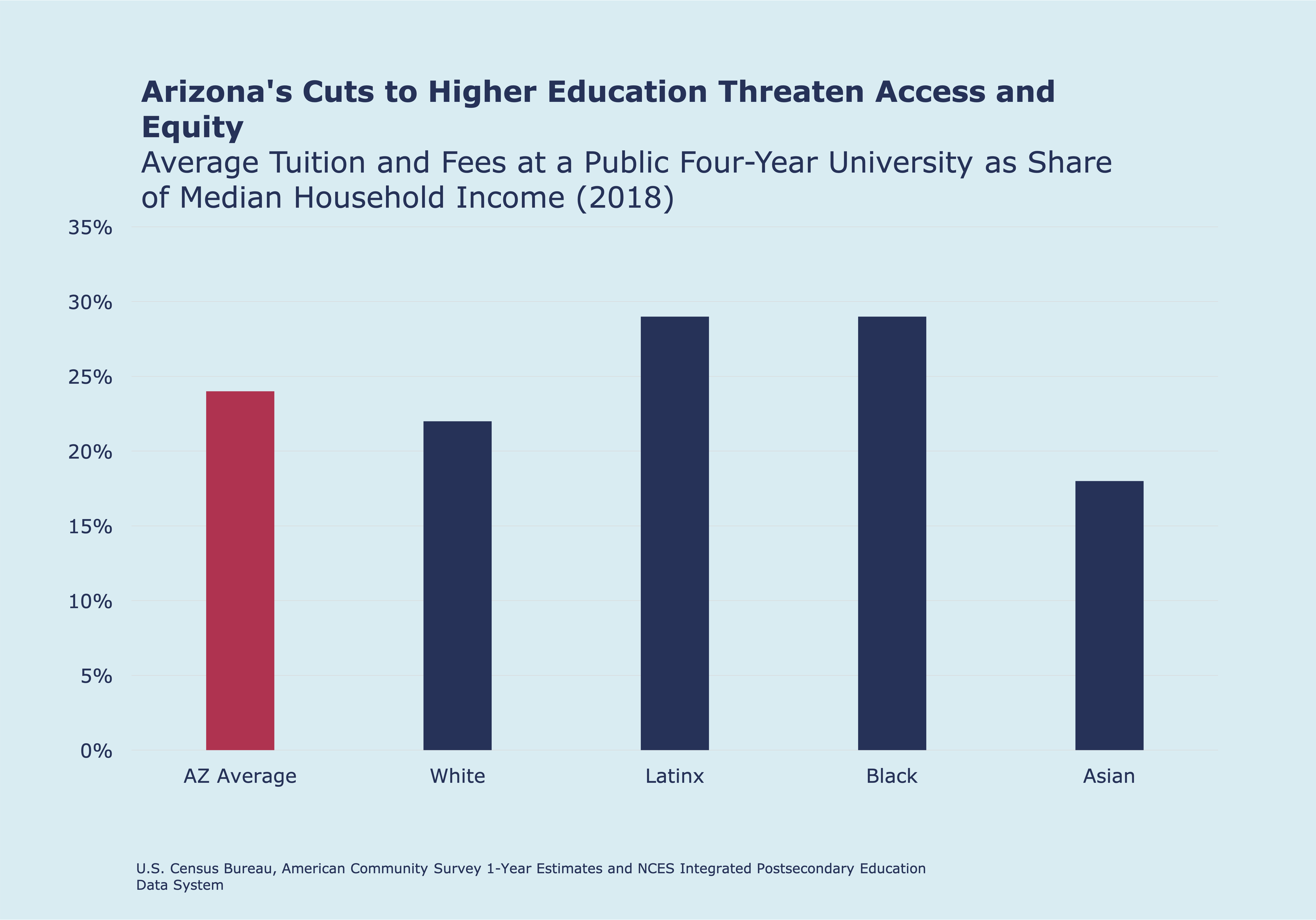
Rising college costs place much greater burdens on families of color, who pay much more of their income for college because of longstanding discrimination in employment and wages. The average in-state net price at a public four-year college in 2018 accounted for 29 percent of the median household income for both Black and Latinx households, compared to 24 percent of the Arizona average.
Arizona leaders can choose a better path for higher education. Instead of cutting taxes, Arizona’s Governor and legislators can work to expand the skills and diversity of its workforce and dramatically improve the future of its students and their communities by:
- Fully funding preschool to postsecondary statutory requirements.
- Increasing state financial aid and investments for students in need.
- Increasing university and community college funding to avoid future tuition increases.
- Creating pathways for undocumented Arizona students to obtain affordable postsecondary education.