

Arizona’s workers need unemployment insurance reform — now
In Arizona, as in much of the county, the economic shockwaves from COVID-19 have exacerbated vulnerabilities for workers. As businesses shutter and employees are sent home, the unemployment rate in Arizona rose to 12.6% in April and will likely continue to climb. While unemployment insurance (UI) is intended for those who have lost work through no fault of their own, the pandemic has exposed serious flaws in Arizona’s UI system. New claims for UI have skyrocketed to over 600,000 initial claims since March, overwhelming Arizona’s Department of Economic Security, putting household finances on the brink.
Arizona’s maximum weekly benefit of $240 per week is wholly inadequate to replace lost wages for UI recipients and afford basic needs. The federal Coronavirus Aid, Relief, and Economic Security (CARES) Act boosted UI benefits by $600 per week and expanded eligibility. However, many important provisions of CARES are short-term or still leave workers ineligible due to Arizona’s restrictive system. After July, UI-eligible workers nationally will not receive the $600 boost and revert to Arizona’s maximum weekly benefit of $240/week—among the lowest in the country, and just over half of that of most neighboring states. Increasing UI benefits will also help keep Arizona’s economy afloat as participants spend benefits locally.
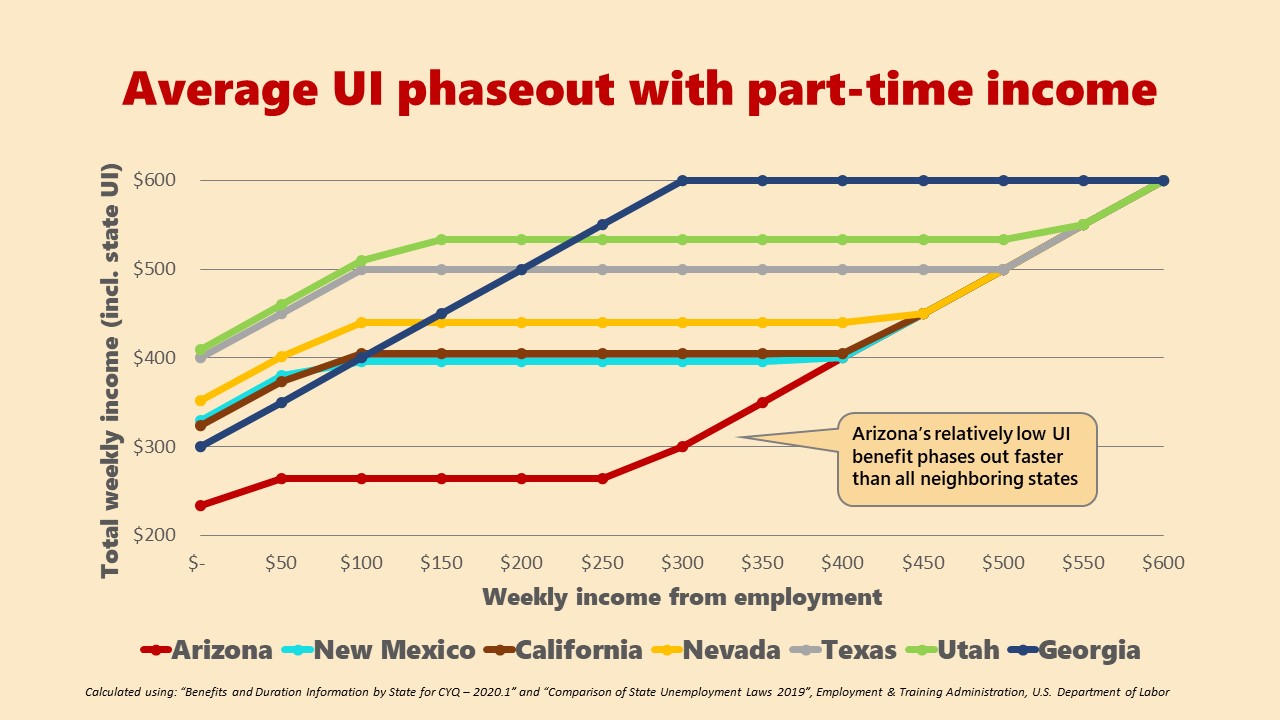
Arizona’s laws also shut out more workers from UI. Currently, minimum wage workers must have worked an average of 30 hours per week to qualify—a threshold higher than any other state in the US. Arizona also does not allow the most recently completed calendar quarter to count towards UI eligibility—a flexibility enacted and used in most other states. And alarmingly, Arizona phases out benefits faster for UI-eligible workers who return to limited part time work, or for those who have had hours cut. All neighboring states allow workers to work and earn limited UI up to a higher threshold, as shown by the chart below.
Arizona’s UI system was broken before, and it will stay that way unless lawmakers act. The Governor and state legislature must swiftly enact a slate of reforms so that more workers are provided an adequate benefit. The Arizona Center for Economic Progress has joined with a host of other organizations to call for these UI measures in an open letter to elected officials. Arizona’s workers have shown tremendous resilience and flexibility as the COVID-19 shutdowns have disrupted livelihoods—they deserve an equally resilient and flexible UI system.